On this page (9 sections)
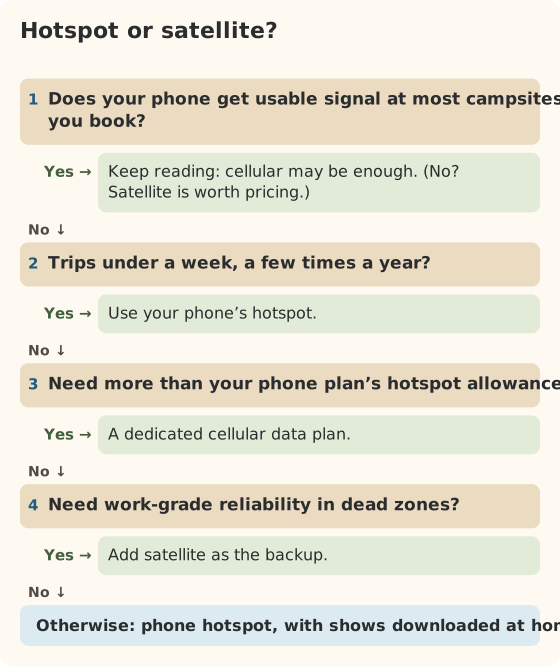
A cellular hotspot beats any satellite plan when your trips are short and your phone already gets a usable signal where you camp. In that case you’re paying satellite prices to fix a problem you don’t have. Satellite wins only where phones fail: public land, deep canyons, mountain parks, and long empty stretches. Most weekend and short-trip campers should start with cellular and add satellite only after they hit a dead zone that matters.
We run a site about Starlink for RVs, and we still say this first. The travel plan picker does too: if your trips are short and your routes have good coverage, it tells you a hotspot is cheaper before it shows any satellite plan.
The one question that decides it
Does your phone work where you actually camp?
Not “in your state”. Not “on the highway”. At the campsites you book. If the answer is yes for most nights, cellular will almost certainly cost less. If the answer is no for the nights that matter, satellite is the tool.
Cost of each route
Prices come from our data files: Starlink prices from starlink.com’s public order data, carrier prices as reported by carrier pages or reviews (marked “reported”). Carrier prices often assume AutoPay and exclude taxes and fees.
| Route | Monthly price | Data | Up-front gear | Price per GB of allowance |
|---|---|---|---|---|
| Phone hotspot on your current plan | Your plan | Your plan’s hotspot allowance | None | — |
| Verizon Pro hotspot, added to a Verizon Unlimited line | $40 (reported) | 100GB | A hotspot or your phone | $0.40 |
| Visible+ Pro (phone plan) | $45 (reported) | Unlimited, hotspot capped at 15 Mbps | Your phone | — |
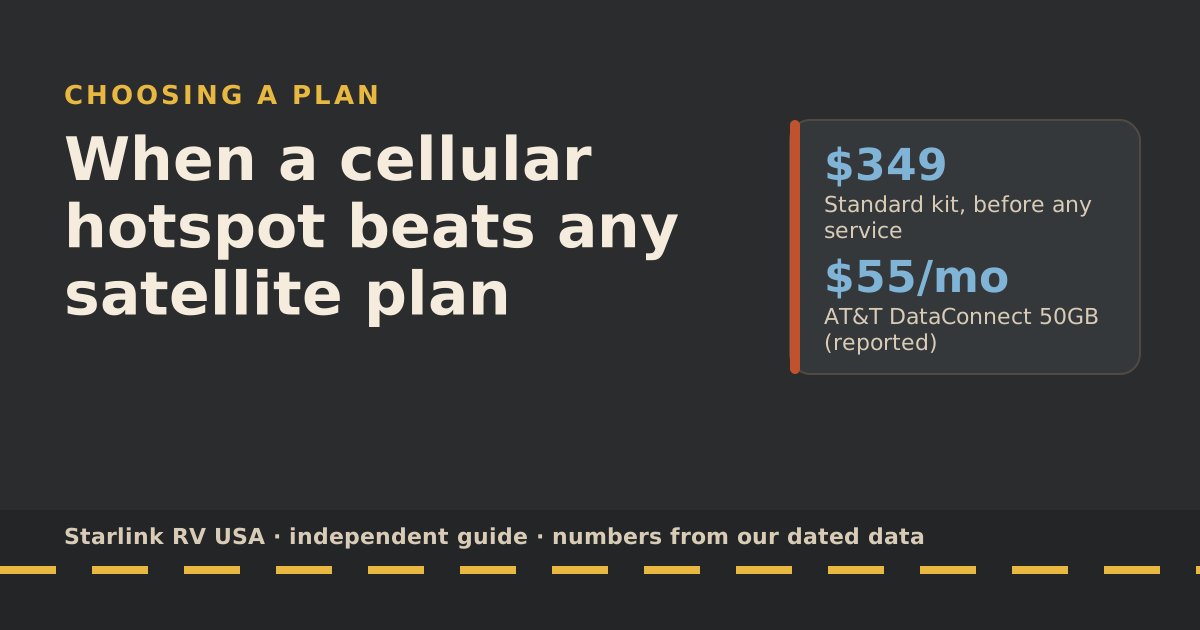
| AT&T DataConnect 50GB | $55 (reported) | 50GB | A hotspot device | $1.10 |
| Verizon Pro hotspot, standalone | $90 (reported) | 100GB | A hotspot device | $0.90 |
| T-Mobile AWAY 200GB | $110 (reported) | 200GB, then slowed | Gateway included (reported) | $0.55 |
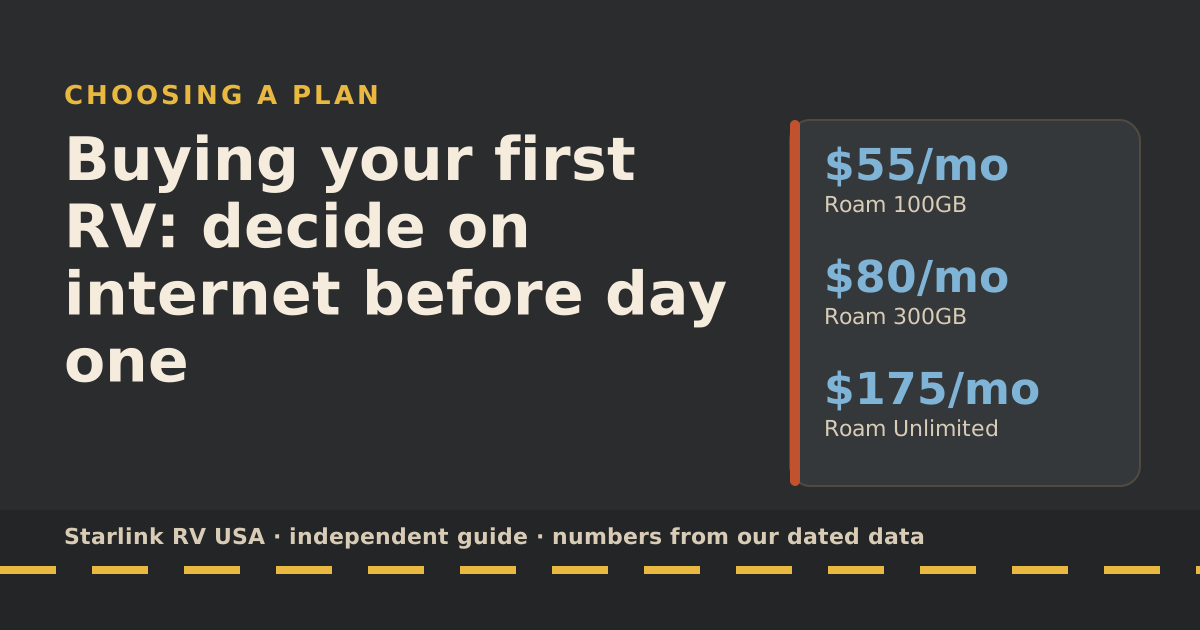
| Starlink Roam 100GB | $55/mo | 100GB | $349 kit | $0.55 |
| Starlink Roam 300GB | $80/mo | 300GB | $349 kit | $0.27 |
Two things jump out:
- Per GB, Roam is cheap. Roam 100GB costs about the same per month as a 50GB cellular data plan and gives twice the allowance.
- The kit changes everything for short trips. $349 up front is several months of any cellular plan. If you only camp a handful of weekends, the kit alone outweighs the per-GB savings.
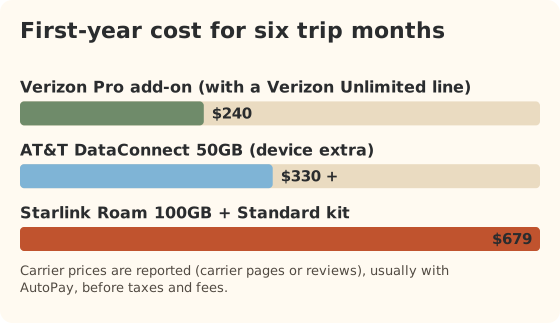
First-year cost for six trip months
Say you camp in six different months and keep a plan active only in those months.
| Route | Service for 6 months | Gear | First year |
|---|---|---|---|
| Phone hotspot | Your plan | None | Your plan |
| Verizon Pro add-on | $240 | Your phone | $240 |
| AT&T DataConnect 50GB | $330 | Hotspot device, price varies | $330 plus device |
| Starlink Roam 100GB | $330 | $349 | $679 |
Whether you can start and stop a cellular plan month to month depends on the carrier’s terms. Check before you sign up.
Where hotspots fall short
Cellular isn’t free of catches. Know them before you skip satellite:
- No signal, no internet. Boosters can only strengthen a weak signal; they can’t create one.
- Hotspot limits. Phone plans often cap hotspot data or speed. Our data notes Visible+ Pro caps hotspot speed at 15 Mbps (reported), which is fine for email and SD video but tight for HD on several screens.
- Slowdowns after the cap. T-Mobile AWAY 200GB is reported to slow sharply after 200GB.
- Busy campgrounds and events. A full park on a holiday weekend can crowd the local tower.
Satellite has its own: trees block it, it needs a clear view of the sky, and Starlink says Roam plans are deprioritized compared with other plans at busy times, with peak hours around 6 to 11 p.m.
Coverage checks that actually work
Coverage maps are a starting point and are often optimistic. Before you decide:
- List your campgrounds. The ones you booked last year and this year.
- Check each carrier’s map for those exact spots, not the nearest town.
- Read recent camper reviews. Many reviews mention cell signal by carrier. Look for posts from the last year.
- Test on your next trip. Note bars and a speed test at each site. One season of notes beats any map.
- Mark the dead zones. If only one or two trips a year hit them, plan offline evenings for those trips instead of buying satellite.
When satellite does win
- Boondocking on public land, where phones often show nothing.
- Mountain and canyon parks, where terrain blocks towers.
- Work that can’t drop, even for one trip a year. Add satellite as the backup, not the main link.
- Long trips through empty country. A month in the backcountry changes the math; see the 6-week road trip guide.
If you need both, you don’t have to choose. A dual-WAN router can use cellular first and switch to satellite when the cell link fails. Our cellular-first guide explains how.
Three trip patterns, decided
Pattern 1: five long weekends a year at state parks near towns. Phones work at four of the five parks. The family streams a movie each night.
- Data: about 21 GB per three-day weekend in our planning numbers.
- Decision: phone hotspot, with movies downloaded at home for the one park without signal. Satellite would cost $624 the first year for five trips, or about $124.80 a trip.
Pattern 2: a dozen boondocking trips a year on public land. Phones show no service at most camps.
- Data: light, but it has to work somewhere with no towers.
- Decision: satellite. Cellular can’t help where there’s no signal. Roam 100GB in trip months is the usual fit; the weekend trips guide shows the yearly cost of each on-and-off pattern.
Pattern 3: monthly trips, one partner works remotely, mixed coverage.
- Data: about 13 GB a day on work days in our planning numbers.
- Decision: both. Cellular first where it works, satellite for the rest, through a dual-WAN router. For work, two networks beat one big plan, because the second one covers the first one’s dead spots.
The pattern behind the three answers: coverage decides whether you need satellite at all; data decides which plan; work decides whether you need two networks.
Common mistakes
- Buying satellite before testing your phone at your parks. Test first.
- Paying for a dedicated hotspot when your phone plan already includes enough. Read your plan’s hotspot terms.
- Assuming “unlimited” phone plans include unlimited hotspot. Usually they don’t, or they slow it.
- Comparing monthly prices only. Count the kit for satellite and the device for cellular.
What we don’t know
- Carrier prices as you read this. They’re reported, not from a contract, and change often. Our data shows the date we checked.
- Your coverage. Only on-site tests can tell you.
- Contract and device terms for each carrier plan. Read them before you sign.
What to do next
Run the travel plan picker with your trip pattern. It checks the hotspot route first and only recommends satellite when it’s the better buy. For the full side-by-side of campground Wi-Fi, cellular and satellite, read best internet for RV living.
Questions people ask
Is a hotspot better than Starlink for camping?
For short trips to places with good cell signal, yes: it costs less and needs no extra gear. Starlink is better where there’s no signal, which is common on public land, in canyons and in some national parks.
How much does a cellular hotspot plan cost compared with Starlink Roam?
From our data: AT&T DataConnect 50GB is reported at $55 a month, Verizon’s Pro hotspot at $90 standalone for 100GB, and T-Mobile AWAY 200GB at $110. Roam 100GB is $55/mo plus the $349 kit. Carrier prices are reported, so confirm before buying.
Can I use my phone as a hotspot instead of buying anything?
Often, yes. Check your phone plan’s hotspot allowance and speed; many plans slow hotspot data after a set amount. For a few weekends a year with good signal, that may be all you need.
Does a cell booster replace satellite?
No. A booster can only amplify a weak signal that’s already there. In a true dead zone there’s nothing to boost, which is where satellite helps.
Can I use both a hotspot and Starlink?
Yes, and many full-timers do. A router can use cellular first and switch to satellite when cell drops. See our cellular-first setup.
Sources
- T-Mobile AWAY review (SatelliteInternet.com), retrieved Oct 5, 2026
- Hotspot plans (Verizon), retrieved Oct 5, 2026
- DataConnect plans (AT&T), retrieved Oct 5, 2026
- Plans (Visible), retrieved Oct 5, 2026
- Slow Speeds: Troubleshooting (Starlink help center), retrieved Oct 6, 2026
- Roam plans and kits for US addresses (starlink.com public order data), retrieved Oct 5, 2026
- How to control how much data Netflix uses (Netflix Help Center), retrieved Oct 5, 2026
Prices and plan rules on this page are filled in from our dated data files when the site is built; hover a number to see when we checked it.
Research and spec-based analysis. We haven’t used Starlink in an RV, van or boat; this post is built from Starlink’s own documents, carrier pages and dated reports, cited above. Links to Starlink’s plan pages here use the site owner’s own referral link: the owner may get a referral reward if you order, and your price is the same. There are no affiliate links. Starlink and Roam are trademarks of Space Exploration Technologies Corp. Starlink RV USA is not affiliated with, endorsed by, or sponsored by SpaceX or Starlink. Spotted an error? Tell us.