Starship puts the first 26 Starlink V3 satellites in orbit
On its 14th test flight, SpaceX's Starship reached orbit and released 26 Starlink V3 satellites, the first of a much larger satellite generation. It does not change any plan, price or rule today.
- First reported
- Posted
- Updated
Research and spec-based analysisUS only. Not tested on the road by us.
What changed
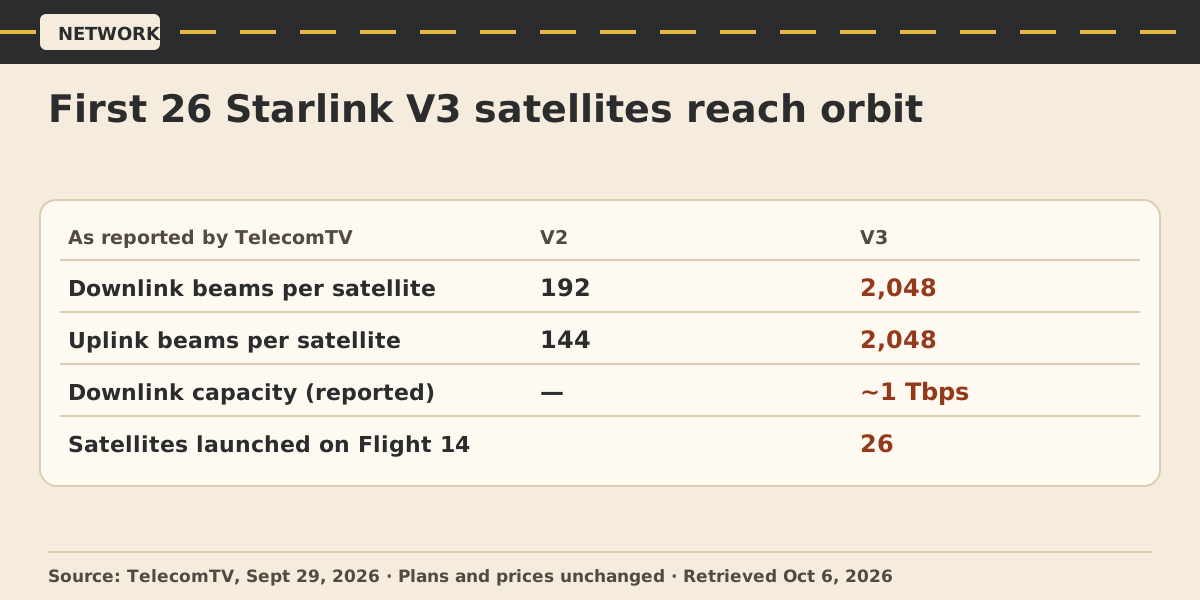
TelecomTV reported on September 29, 2026 that SpaceX’s Starship reached orbit on its fourteenth test flight and released 26 Starlink V3 satellites. These are the first satellites of Starlink’s third generation, which are much bigger than the V2 Mini satellites that Falcon 9 rockets have been launching.
The report says each V3 satellite supports about 1 terabit per second of downlink and 160 gigabits per second of uplink, with 2,048 beams each way, compared with 192 downlink and 144 uplink beams on V2. Those are SpaceX’s figures as reported, not independent measurements.
The flight was not perfect. Per the report, one of the main engines shut down early on the way up and the mission was cut short, with the ship coming down in the Pacific after about three hours instead of the planned ten. The satellites were released before that.
“All 26 Starlink V3 operational satellites deployed and operating nominally,” Elon Musk said, as quoted by TelecomTV.
Who is affected
Nobody’s plan changes because of this launch. Over time, more network capacity matters most to:
- Roam users in busy areas. Standard Roam data is not top priority: Starlink’s Ocean Mode page says Ocean Mode gets “higher network priority than standard Roam data.” In crowded places, like popular campgrounds near cities or big rallies, more capacity is what could ease slow evenings.
- Full-timers who work from the road and need steady upload speeds for video calls.
- Boaters and remote travelers, who depend on how many satellites pass overhead far from towns.
What it means for you
For now, nothing to do. A first batch of 26 satellites is small next to a network of many thousands. Treat this as a direction of travel, not a speed upgrade you can count on this season.
What you can do:
- Plan with today’s numbers. Our data use guide shows what streaming and video calls use per hour. Pick a plan on that, not on future capacity.
- Re-read the trade-offs. Our is Roam worth it? page lists the catches people report today, including slowdowns at busy times.
- If you split time between home and road, Roam vs Residential still decides which plan fits. Network upgrades don’t change which plan works where.
What stays the same
- Roam prices, data caps, the 100 mph in-motion limit and the 30-day abroad rule are unchanged.
- Your dish works with the network as it is. The report does not say any dish needs replacing for V3.
- Standard Roam data still ranks below paid priority data, such as Ocean Mode, on a busy network.
How we handled this report
This is a network milestone, not a rule change, so it has no row in our rules changelog. The capacity figures come from SpaceX via the press. We’ll write a follow-up only if Starlink changes a plan, price or rule because of it.
Source
SpaceX deploys V3 Starlink satellites as Starship reaches orbit, TelecomTV, dated . Press report: facts from it are marked “reported”. Retrieved .
What we don’t know yet
- When V3 satellites will start carrying customer traffic. The report says SpaceX expects that within a few weeks, pending tests.
- How many V3 launches it will take before travelers notice any change in speeds or congestion.
- Whether more capacity will ever show up as lower prices or bigger data caps. Starlink has said nothing about that.
Correction log
Independent · not affiliated with SpaceX or Starlink. Starlink and Roam are trademarks of Space Exploration Technologies Corp. Starlink RV USA is not affiliated with, endorsed by, or sponsored by SpaceX or Starlink. Starlink links in this article use the site owner’s own referral link: the owner may get a referral reward if you order, your price is the same, and it never decides what we report. Nobody paid for this article. It is general information, not legal advice; Starlink can change prices and rules at any time. How we make money · How we research.