Ookla: 40% of US Starlink users now hit 100/20 Mbps
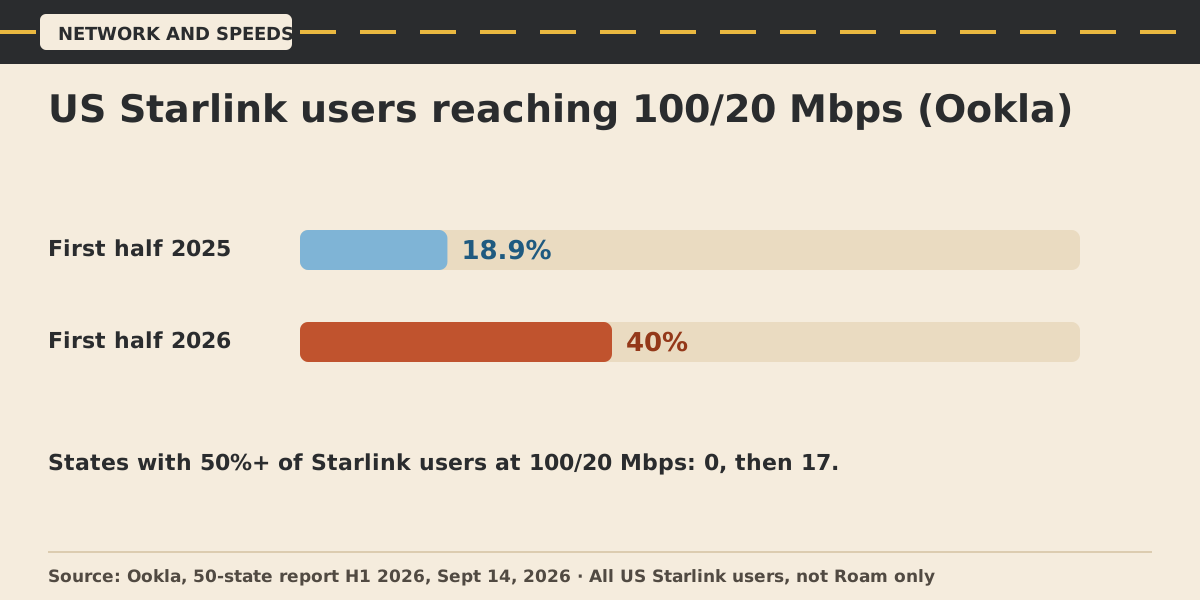
Ookla's 50-state report for the first half of 2026, published September 14, says 40% of US Starlink Speedtest users met the FCC's 100/20 Mbps broadband benchmark, up from 18.9% in the first half of 2025.
- Announced
- Posted
- Updated
Research and spec-based analysisUS only. Not tested on the road by us.
What changed
Ookla, the company behind Speedtest, published its 50-state broadband report for the first half of 2026 on September 14, 2026. Its Starlink section says the share of US Starlink Speedtest users who got at least 100 Mbps down and 20 Mbps up, the FCC’s minimum definition of broadband, more than doubled in a year:
“In the first half of 2025 the company delivered 100/20 Mbps to 18.9% of U.S. Speedtest users. In the first half of 2026, that more than doubled to 40%.”
Other points from the report:
- 17 states now have at least half of their Starlink Speedtest users reaching 100/20 Mbps. In the first half of 2025, no state did. In the second half of 2025 it was five.
- South Dakota led at 58.2%, then Nebraska (57%). The Great Plains did best.
- Starlink still trails wired broadband: 46 states and DC have at least 60% of fixed-broadband users at 100/20 Mbps.
- The states with the most Starlink tests, which Ookla reads as the most users, were California, Texas, Florida, Arizona and Washington.
Who is affected
This is a measurement, not a rule. It’s useful context for:
- People deciding whether satellite is good enough for remote work from an RV.
- Travelers comparing Starlink with cellular hotspots. A better median doesn’t mean every campsite is fast.
- Snowbirds and full-timers who spend months in the sunbelt states that make up much of the test volume.
What it means for you
Two cautions before you read too much into the headline.
First, most of these tests come from home customers, not Roam users on the move. Roam data doesn’t get top priority on a busy network; Starlink’s own Ocean Mode page says paid Ocean Mode data ranks higher than standard Roam data. So expect your numbers on Roam to vary more than a home user’s.
Second, 100/20 is a benchmark, not a requirement. Everyday RV use, like streaming in the evening or a work call, needs far less than 100 Mbps; our data guide lists what each activity uses. For work calls, a steady connection and decent upload matter more than peak download.
What you can do now:
- Size your plan by data, not speed. Our data use guide turns hours of streaming and calls into GB per month.
- Read the catches. Our is Roam worth it? page collects the slowdowns people report, including at busy times.
- Keep a backup. Our RV internet comparison explains when cellular beats satellite, for example under heavy trees.
What stays the same
- Starlink’s own typical Roam speed range (shown in “Today’s values” below) is what it publishes for planning. Ookla’s report doesn’t change it.
- No plan, price or rule changed with this report.
How we handled this report
We read Ookla’s report directly. Ookla is an independent measurement company, but its data comes from people who choose to run Speedtest, which can lean toward users who are checking a problem or a new setup. We cite the figures as Ookla’s, for all US Starlink users, and don’t apply them to Roam alone.
Source
50 U.S. States Broadband Speed Performance, H1 2026 Report, Ookla, dated . Primary source. Retrieved .
- US Broadband Performance 2026: Connecticut Leads Fixed Broadband as Starlink Speeds Improve, TelecomLead. Retrieved .
What we don’t know yet
- How Roam users did on their own. Ookla's figures cover all US Starlink Speedtest users, and most of those are home customers at a fixed address.
- How speeds hold up at crowded campgrounds or rallies. A statewide share says nothing about one busy site on a holiday weekend.
- Whether the trend continues into the second half of 2026, when the first V3 satellites start to join the network.
Correction log
Independent · not affiliated with SpaceX or Starlink. Starlink and Roam are trademarks of Space Exploration Technologies Corp. Starlink RV USA is not affiliated with, endorsed by, or sponsored by SpaceX or Starlink. Starlink links in this article use the site owner’s own referral link: the owner may get a referral reward if you order, your price is the same, and it never decides what we report. Nobody paid for this article. It is general information, not legal advice; Starlink can change prices and rules at any time. How we make money · How we research.