Network and speedsBackground
FCC approves 7,500 more Starlink Gen2 satellites
Broadband Breakfast reported on January 9, 2026 that the FCC approved SpaceX's request for 7,500 more second-generation Starlink satellites, bringing the authorized Gen2 total to 15,000, with lower orbits and more spectrum.
- Announced
- Posted
- Updated
Research and spec-based analysisUS only. Not tested on the road by us.
What changed
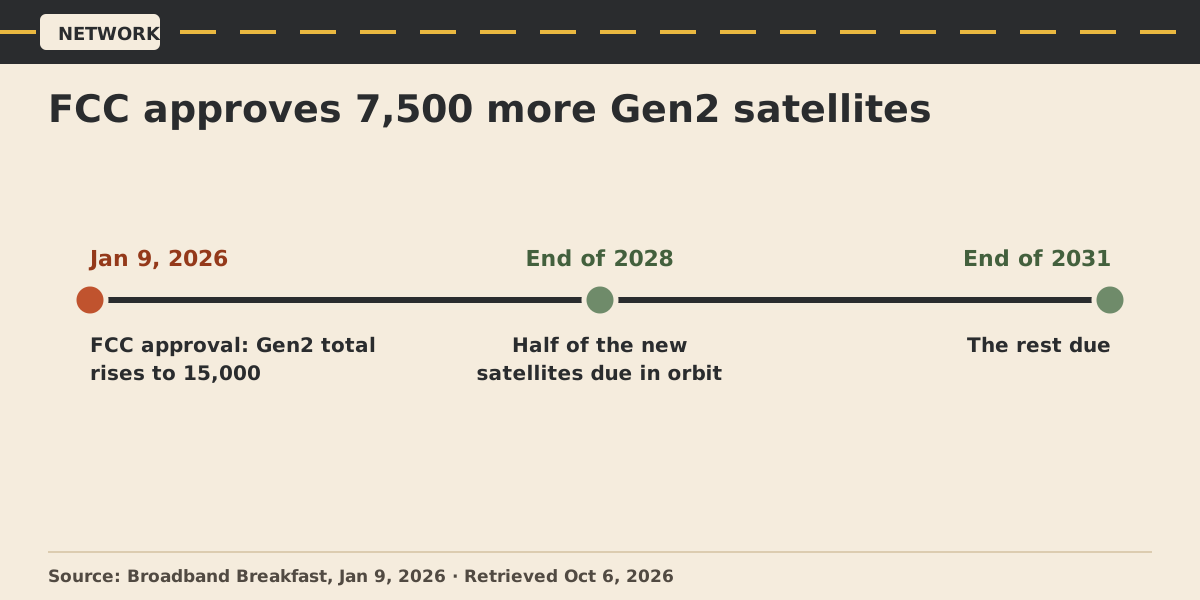
Broadband Breakfast reported on January 9, 2026 that the Federal Communications Commission approved SpaceX’s request to launch 7,500 more Starlink Gen2 satellites. That brings the authorized second-generation constellation to 15,000 satellites.
As reported:
- SpaceX must have half of the newly approved satellites deployed and operating by the end of 2028, and the rest by the end of 2031.
- The satellites may operate as low as 340 kilometers, lower than many existing Starlink satellites. Lower orbits can mean lower latency.
- The FCC granted use of more spectrum bands and higher power in some bands, with parts of that tied to ongoing FCC rulemaking.
- The authorization includes direct-to-cell capability outside the US and supplemental coverage inside it.
Broadband Breakfast quotes SpaceX’s stated goal for the extra spectrum: “to achieve symmetrical download and upload speeds, thus enabling fiber-like service for American consumers.” That is SpaceX’s aim, not a promise of what users will see.
The report says more than 5,000 Gen2 satellites were already in orbit at the time.
Who is affected
This is a license, not a service change. Over the long run it matters to:
- Roam users in busy areas, where capacity limits evening speeds.
- Remote workers on the road, who care most about upload speed and latency.
- Phone users in dead zones, since direct-to-cell services (like T-Mobile’s T-Satellite) run on Starlink satellites.
What it means for you
Nothing to do now. An FCC approval lets SpaceX build; it doesn’t change your plan or speed today. Launches take years, and the deadlines run to 2031.
How to use this news:
- Don’t buy on future promises. Decide with today’s prices, caps and rules. Our is Roam worth it? page sets out the trade-offs people report now.
- Keep comparing options. Cellular is still cheaper for many short trips. Our RV internet comparison covers when each wins.
- If you’re choosing a plan for home and road, Roam vs Residential is unaffected by network approvals.
What stays the same
- All Roam and Residential plans, prices and rules.
- Your dish. Nothing in the report says existing hardware needs to change.
How we handled this report
We cite Broadband Breakfast, a trade outlet that covers FCC actions. We could not load the FCC’s own document when we checked, so the details above are as reported. This is a network milestone, not a rule change, so it has no row in our rules changelog. Since then, SpaceX has begun launching larger V3 satellites on Starship; we covered that separately.
Source
FCC Approves 7,500 More Starlink Gen2 Satellites, Broadband Breakfast, dated . Press report: facts from it are marked “reported”. Retrieved .
What we don’t know yet
- How fast SpaceX will actually launch the new satellites, and how much capacity reaches US travelers rather than other markets.
- Whether added capacity will change Roam prices, data caps or priority. Nothing in the approval addresses plans.
Correction log
Independent · not affiliated with SpaceX or Starlink. Starlink and Roam are trademarks of Space Exploration Technologies Corp. Starlink RV USA is not affiliated with, endorsed by, or sponsored by SpaceX or Starlink. Starlink links in this article use the site owner’s own referral link: the owner may get a referral reward if you order, your price is the same, and it never decides what we report. Nobody paid for this article. It is general information, not legal advice; Starlink can change prices and rules at any time. How we make money · How we research.